Capital Distortion
The smart aleck and the seduction.
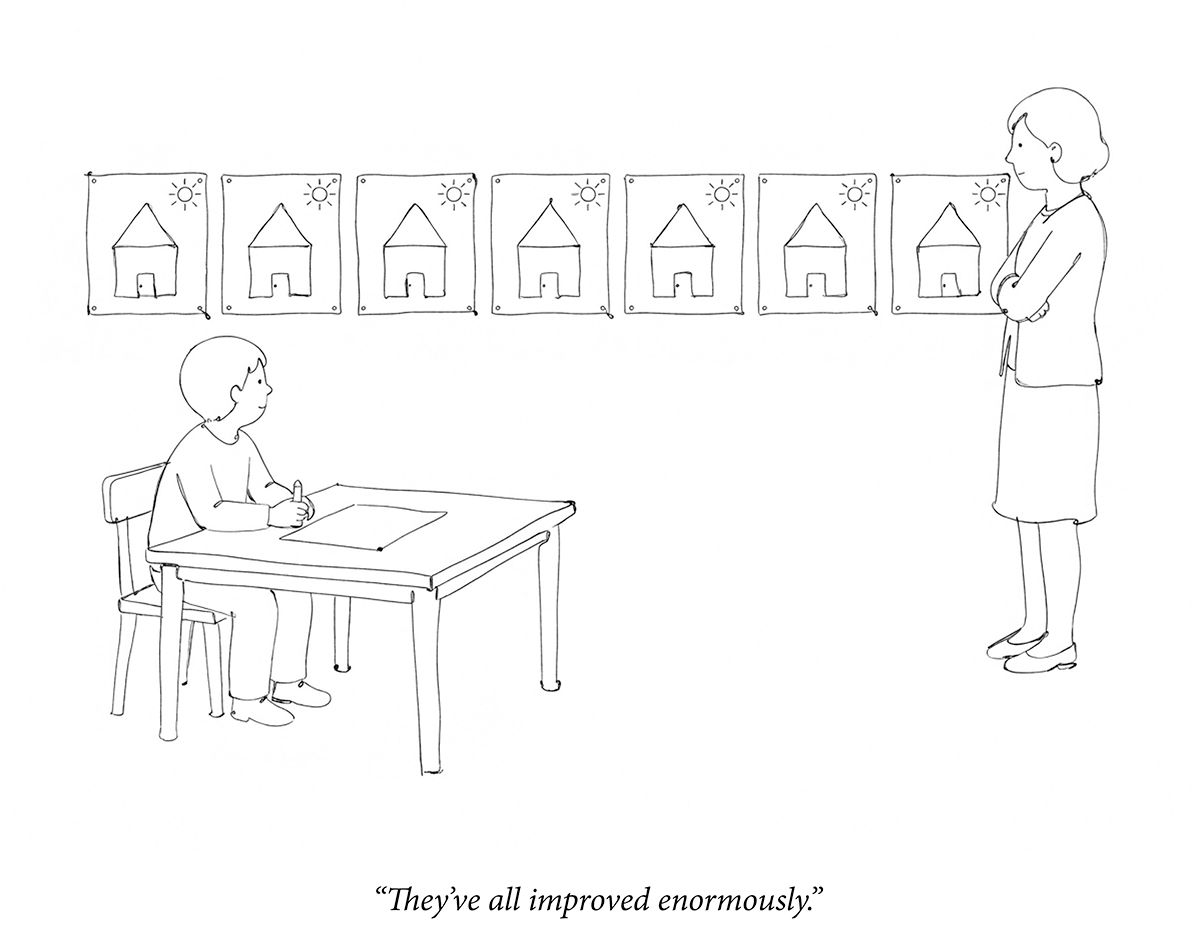
Read four strategy documents from four different companies this year and something registers before you can name it. All four are well written. None of them is wrong. And by the third you have stopped being able to remember which company you are reading about.
I like writing. I think I have a voice, and it is reasonably consistent with my personality—sometimes smart, sometimes a smart aleck.
I have been using AI while writing The Growth Gap. It has put two problems in front of me.
The first is turning down the smart aleck. A book asks for a register a newsletter does not, and the reflex that lands in a paragraph can undercut a chapter.
The second is using the tool without being seduced by it. It writes a pretty good sentence. A pretty good paragraph. On a bad day, a pretty good chapter.
It took me a while to notice those are the same problem.
Four documents, one voice
This is happening well beyond my manuscript, and it is easier to see from outside my office than inside it.
Read four strategy documents from four different companies. They’re well written, well organized, the headings are good—and somewhere in the third you stop being able to remember which company you are reading about.
Nothing in any of them is wrong. That’s what makes it hard to see.
The tools did what they promised
The claim made for generative tools is that they raise the floor. People who wrote badly now write adequately. People who wrote adequately write well.
That’s correct, and it has been measured.
Better, and more like each other
Doshi and Hauser (2024), in Science Advances, ran an experiment. Some writers were given story ideas from a large language model, some were not. Access to the model caused stories to be judged more creative, better written, and more enjoyable—the effect largest among the weakest writers. The same experiment found the model-assisted stories more similar to one another than the stories written without it.
The authors call it a social dilemma. Every writer is individually better off. Collectively, a narrower range of work exists.
That’s short fiction, and a strategy document is not a short story. The analogy holds in the mechanism, not in the stakes.
The flattening did not come from the people
Padmakumar and He (2024) ran a controlled study of argumentative essays written three ways: unaided, with a base model, and with a model tuned on human feedback. The tuned model produced a statistically significant drop in diversity—more similarity between different authors, less lexical and content range.
Then they located it. The reduction came from what the model contributed. The text the humans wrote themselves was unaffected.
Nobody became less original. The tool supplied the sameness, and it supplied the same sameness to everyone. The authors’ own reading is worth sitting with—the improvement that comes from tuning a model to human preference may be what produces the convergence. The better it gets, the more alike you become.
Anderson, Shah, and Kreminski (2024) found the same narrowing in a smaller study, and one thing more: the people working with the model felt less responsible for the ideas.
Less distinctive, and less owned.
Distinctiveness has no line item
This is Capital Distortion. The gain is measurable and immediate—cycle time, output volume, a quality bar that visibly rises. The loss is a reduction in how far your organization’s thinking sits from everyone else’s, and no instrument in the building reads it.
Of the six capital domains an enterprise spends—financial, human, intellectual, reputational, political, social—only the first is built to be read. Distinctiveness lives in the third. Leaders are not indifferent to it. One side of this trade posts a number this quarter and the other posts nothing, in any report, ever.
A trade with one side measured is not experienced as a trade. It is experienced as an improvement.
The part I cannot see from inside the sentence
Back to my two problems.
Turning down the smart aleck means asking the model to sand off the part of my writing that is most identifiably mine. It’s very good at that, and it will do it for anyone who asks.
The seduction is not that the result is bad. It’s better than what I would have managed on a slow afternoon. It’s that from inside the sentence I cannot always tell which parts it improved and which it removed.
They were never two problems. Both are the same act—letting the default decide what my voice is.
You cannot hire your way past the default
Originality is a talent. As an art school grad I’ve never thought otherwise.
But an enterprise doesn’t ship the work of its most original person. It ships what comes out of a process many people run, and that process now starts where everyone else’s starts.
Which is why hiring does not answer this. Talent working from a shared default produces work shaped by the default.
What is scarce is method—a deliberate practice for getting past what the model hands you first. Making that a standing property of how an enterprise commits capital, rather than a habit of whoever happens to care, is the work of Capital Symmetry Governance™, and of Think Wrong, the activation discipline inside it. Both are larger than one note.
The smaller thing is available this week.
Take the last document your organization sent outside its own walls.
If a competitor ran your prompt, how different would their version be?
Which parts of it could only have come from your organization—your evidence, your history, your customers, your argument?
Where in the process that produced it does anyone check?
The third question produces the finding. Most organizations have a step where the draft gets better. Very few have a step where it gets further from everyone else’s. If nobody owns that one, it’s not happening.
Greg