Capital Distortion
The money ran out. That’s not what went wrong.
Large commitments rarely fail in the execution. They fail on an assumption nobody tested, because it arrived as context rather than as a belief. Three questions to answer before the capital commits.
The room where nobody argues
As a board member, I’ve sat through a decade of annual budget reviews for a non-profit that fights human trafficking worldwide. A large number gets approved every year, and what took me the longest to understand is how calm the room is. Nobody argues. Not because nobody cares. The arguing happened upstream, in the analysis, long before the number reached us.
There’s a decision like that in front of you now, with a number attached. An AI deployment, a growth bet, a market entry, a transformation initiative; the category matters less than the size.
This is the last moment at which it is still cheap to change.
The orthodoxy says large commitments fail in the execution. A milestone slipped. The integration was harder than the deck implied. The market moved. Post-mortems get written in that register because that is where the evidence is loudest—visible in the quarter it lands, in the people who leave, in the write-down.
The number that reads as a cause
CB Insights (2026) examined 385 venture-backed companies that shut down from 2023 onward. Capital exhaustion appears in 70% of them, more than any other factor. Read one line further and the 70% stops being a cause.
- Poor product-market fit: 43%.
- Bad timing or macro conditions: 29%.
- Unsustainable unit economics: 19%.
The money ran out because something underneath the spending had never been resolved, and the spending continued anyway.
Yes, but...that’s startup data, and an enterprise is not a startup. The analogy holds in the mechanism, not in the mortality. A firm with a balance sheet does not die of one bad commitment; it absorbs it. Absorption is the more expensive condition, because nothing forces the post-mortem.
The sentence everyone skims
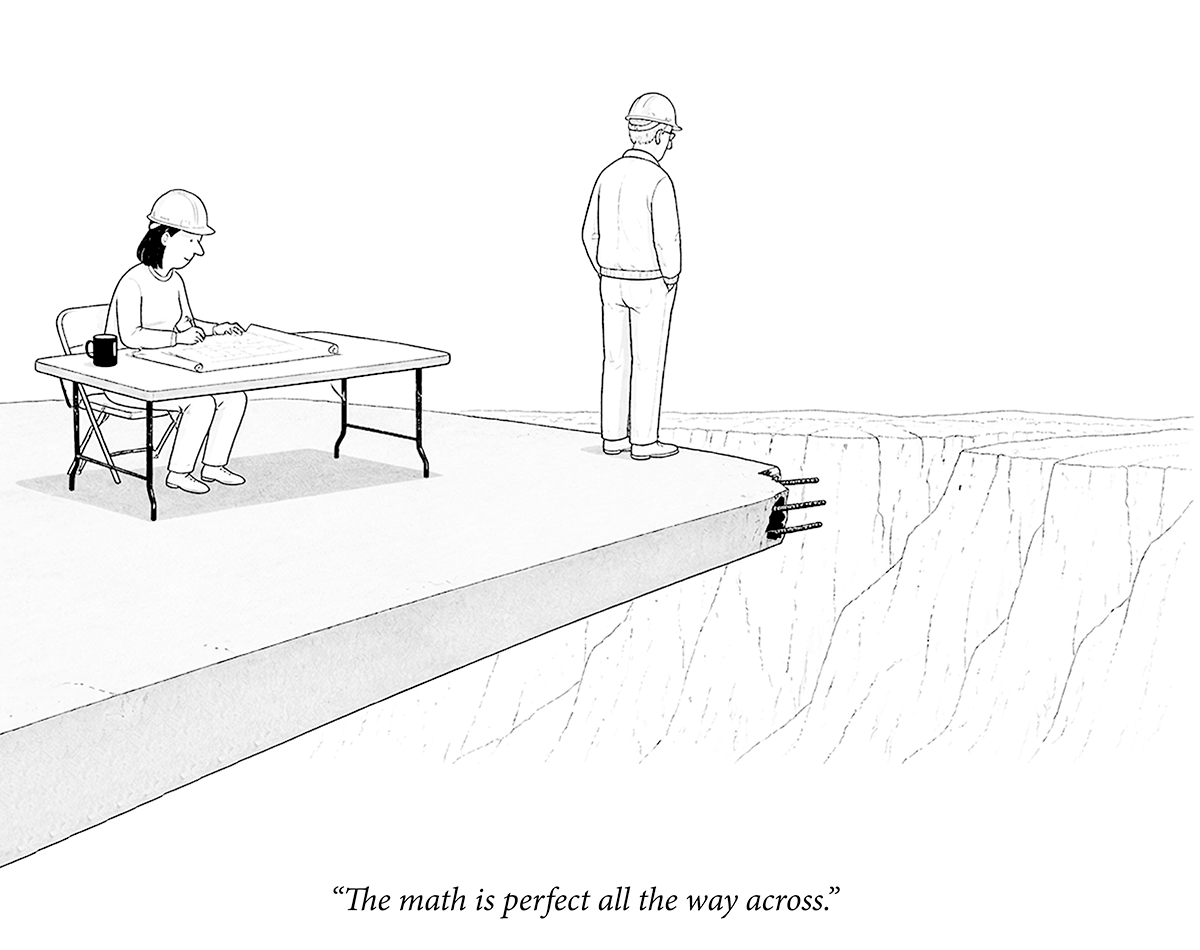
The execution was fine. The premise was never tested.
Expensive failures more often begin as a confident bet on an assumption nobody tested. Not because anyone was careless. Because the assumption never presented itself as an assumption. It arrived as context: the first paragraph of the memo, the sentence everyone skimmed on the way to the model. I’ve skimmed those memos myself. Every number that follows is computed correctly on top of that assumption.
Only one of the six arrives readable
This is Capital Distortion, and it produces the Growth Gap. The review that approves a commitment reads the financial case, because financial capital is the domain built to be read: measured on a standard, reported on a cadence, routed to people who can act on it. Of the six capital domains a large commitment spends—financial, human, intellectual, reputational, political, social—only the first arrives to the board in a form the board can use. The other five are spent silently, and they are where the untested assumption does its damage.
Where the bill actually arrives
Financial capital is also read in the wrong tense. Result lags, which every CFO already knows. Allocation leads and causes. It is observable at the moment of decision, and its consequences arrive in the other five domains months or years afterward.
The room is holding a leading indicator and reading it as a budget.
In an enterprise, those consequences do not arrive as a failure. They arrive as the initiative nobody quite kills, the quiet attrition in the team that ran it, the capability the firm stops believing it has. Nothing forces the post-mortem, and the same premise gets funded again.
The assumptions that are not on the risk register
The discipline is narrow and unglamorous. Before capital commits, uncover the assumption that would change the allocation if it were wrong. Resolve that one.
Most assumptions beneath a large commitment are either correct or inconsequential. Only a few carry capital consequence. Those are the Super Vital Assumptions, and they are rarely on the register, which catalogs what the organization already knows is uncertain. The dangerous assumptions are the beliefs held so long that they stopped being considered beliefs at all.
A test built to come back negative
Then run the smallest credible action that moves that assumption toward certainty. Not a pilot, not a proof of concept, not a minimum viable product—each is a small version of the commitment that tests whether the plan can be run. A Small Bet tests whether the belief underlying the plan is true. It is designed to allow for a negative result.
None of this is caution. Or a slower route to the same decision. The capital will be committed. What changes is what you know at the moment you commit it.
Making that a standing property of how an organization commits capital, rather than the diligence of whoever is in the room, is the work of Capital Symmetry Governance™, and of Think Wrong, the activation discipline inside it. Both are larger subjects than one note. What follows needs neither.
Take the largest commitment in front of you, and answer three questions in writing.
- What is the one assumption that, if it is wrong, sinks this?
- What is the smallest credible action that would settle it, and what does that cost against the commitment it protects?
- What has to be true for that action to run prior to the commitment rather than alongside it?
The finding is usually in the first question. If the answer takes more than a few minutes, the assumption has not been examined; it was assumed by everyone and owned by no one. If it comes quickly but four people in the room name four different assumptions, that is a finding as well, and a more useful one than the answer you went looking for.
— Greg