Capital Asymmetry
What We Count Isn’t What We’d Defend.
I do not think a single soldier has ever bled out on a battlefield for a number. They die for the Constitution, and for the things underneath it.
A box that names the cost
I listened to Lt. Gen. Mark Hertling talk about what he carries on Memorial Day. Not a medal. Not a flag. A box. On the lid, three words: “Make it matter.” Inside are photographs of 253 of his soldiers who did not come home. He looks through them. That is the practice. The wooden cigar box is a ledger of a particular kind of capital, and he keeps it because no one else will.
I’ve been thinking about that box, because it echoes something in my own house I misread for years.
The flags I misread
When my grandfather died, I inherited two Japanese flags covered in handwriting—kanji, in dark ink on white silk, surrounding a red sun. Stationed in Japan after the war, he was responsible for the financial accounting of the occupation and the reconstruction. My mother told me it was one of the happiest periods of his life; he loved the country and its people. So I assumed the flags were gifts. Tokens of affection from colleagues.
They are not. They are yosegaki hinomaru—good-luck flags, signed by a soldier’s family, his neighbors, and the people of his town, then carried into battle inside his tunic. They were taken off the bodies of Japanese soldiers who did not come home. Trophies. A quieter version of the thing the general refuses to let happen to his own dead: a name, erased into an object.
I never got to ask my grandfather about them. I learned what they were long after he was gone.
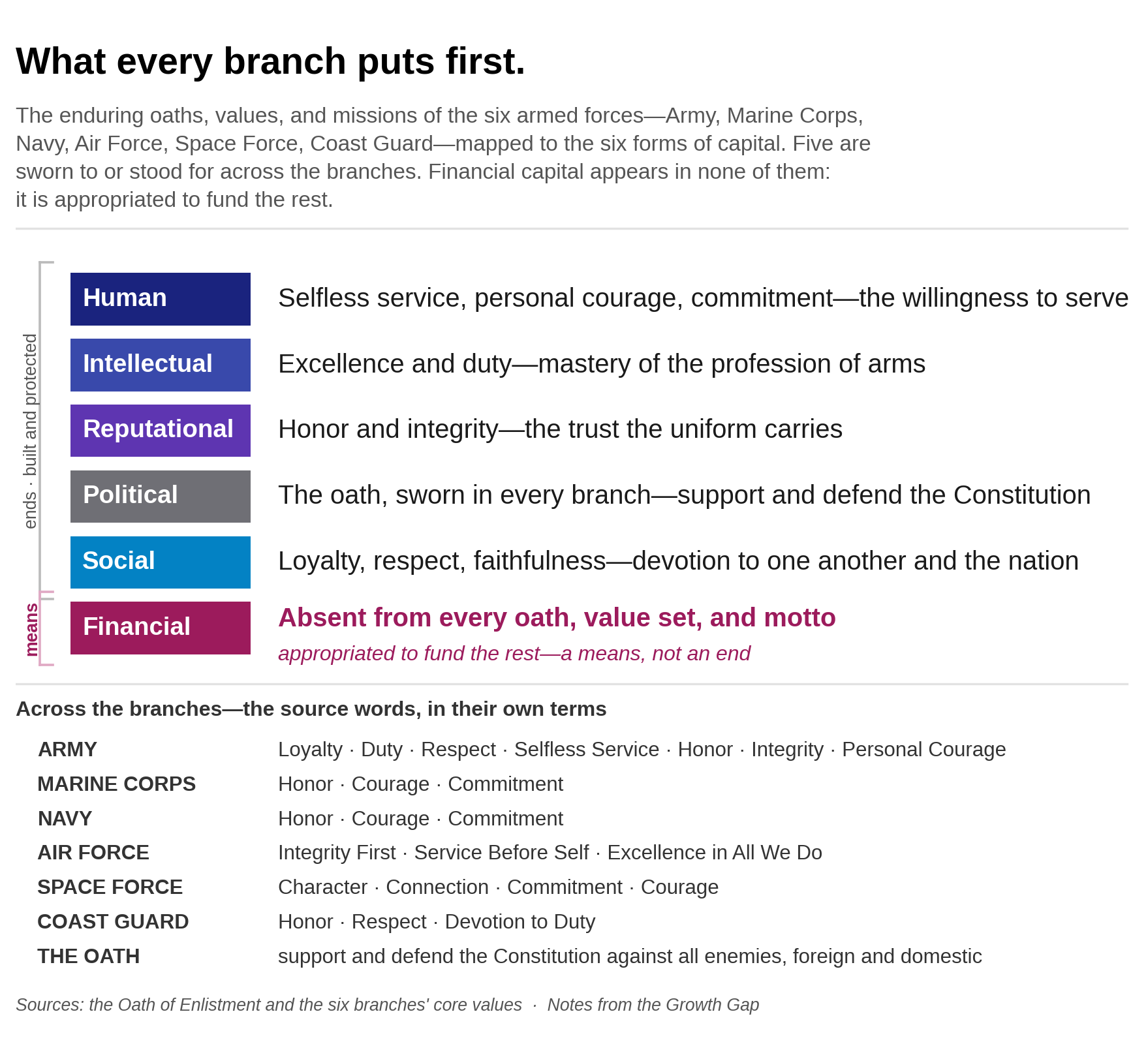 Sources: the Oath of Enlistment and the six branches’ published core values.
The one value we know how to count
Here is the pattern I keep seeing—it is the same one I write about inside companies. We are very good at measuring one form of value. Financial value is legible. It has a number, a unit, and a quarterly report. So it becomes the thing we optimize, the thing we reward, and—this is the part that costs us—the thing we mistake for identity. The rugged, self-made individual; the balance sheet read as a measure of the person.
But financial value is a lagging output. It tells you what already happened. The forms of value that actually determine a country’s future are those without a clean number attached. The human capital—the lives and futures a nation chooses to nurture. The intellectual capital of a place built on very big ideas. The political capital of whether the thing still works as a democracy. The reputational capital of how we understand ourselves and how we are understood elsewhere. The social capital of how we live among other nations rather than against them.
None of those five has a ticker.
An asymmetry at the scale of a country
Inside an organization, I call that gap capital asymmetry: one form governed with precision, five left to manage themselves. It produces no crisis at first. It produces a slow, invisible erosion that the financial numbers cannot see—right up until it arrives all at once, when the cost of fixing it is highest, and the options are fewest.
The erosion has a direction. When the people thin out, the ideas follow. When the ideas thin, trust follows. When trust goes, so does the latitude others extend you, and then the partnerships, and only at the very end does any of it reach the numbers everyone was watching the whole time.
I cannot imagine that a single soldier has ever bled out on a battlefield for a number. No one dies for a quarterly result or for the security of a bank account. They die for the Constitution, and for the things underneath it—the people, the ideas, the standing of the country, and its place among other nations. Memorial Day is, among other things, the one day a year the country audits the part of its balance sheet it cannot otherwise read.
Sending the flags home
So I am sending the flags back. There is paperwork from the Japanese embassy; I hope someone can reunite these flags with the families whose handwriting is still on them. It is a small act of restoration—returning a record of someone else’s human and social capital to the town that wrote it. My grandfather spent his happiest years helping rebuild the country these flags came from. I like to think this finishes a sentence he started.
What would you take a wound for?
If you lead anything, here is the question I would sit with this week.
Name the form of capital your people would actually take a wound to protect.
I bet that it will not be financial. Then ask whether any instrument you have can even detect its condition before it is gone.
That gap—between what you would defend and what you can measure—is the whole of the work. General Hertling keeps his box because the alternative is letting the names become objects. The rest of us keep quarterly reports. This week, I am thinking about the difference and about the two flags that might finally go home.
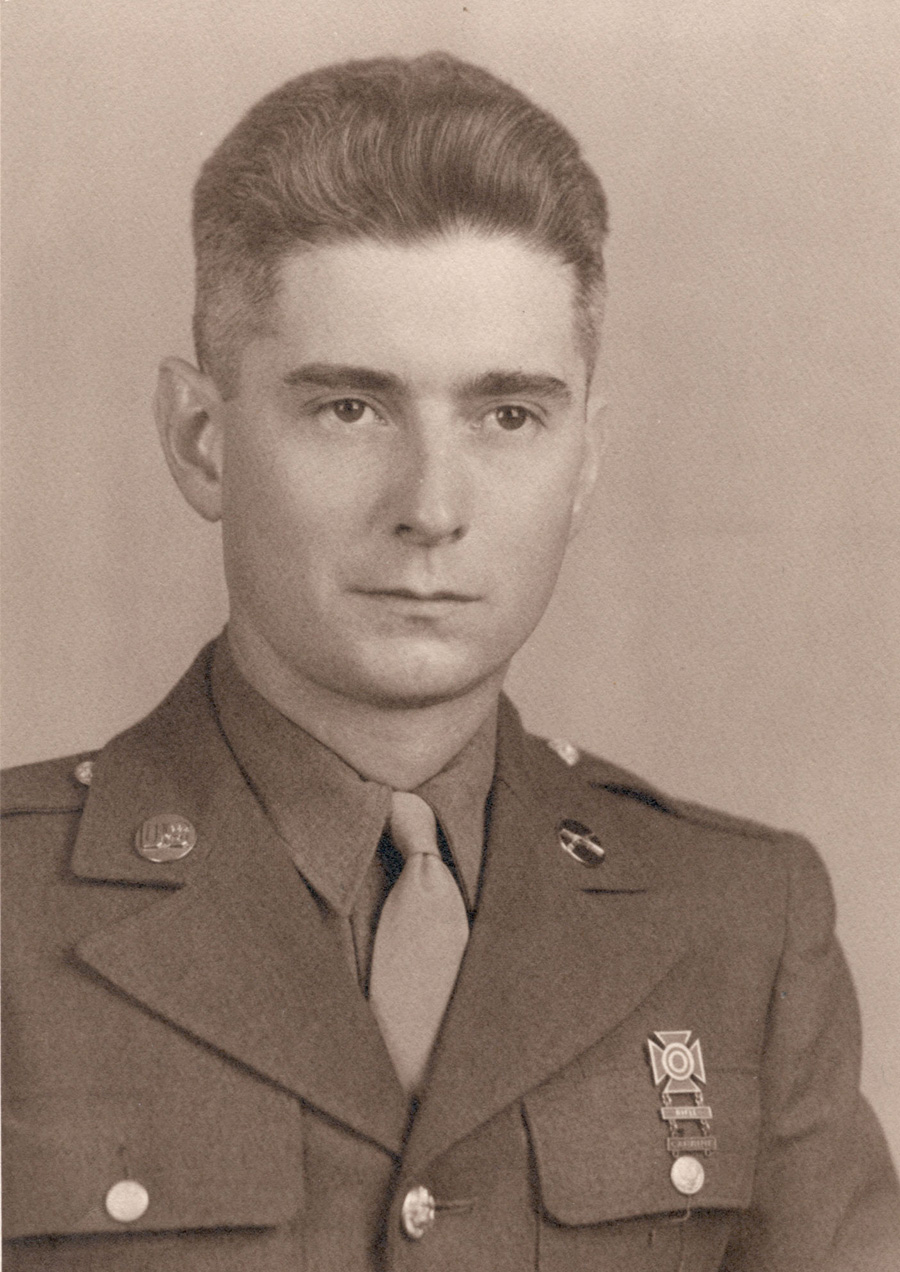 My grandfather, Francis Sullivan, in his Army uniform.
Notes from the Growth Gap is a personal dispatch from the manuscript and the work that surrounds it. Lt. Gen. Mark Hertling has written about the box; the charge “Make it matter…” came from a memorial service led by Gen. Martin Dempsey. His most recent post: Memorial Day 2026: the last full measure, quietly remembered