Capital Distortion
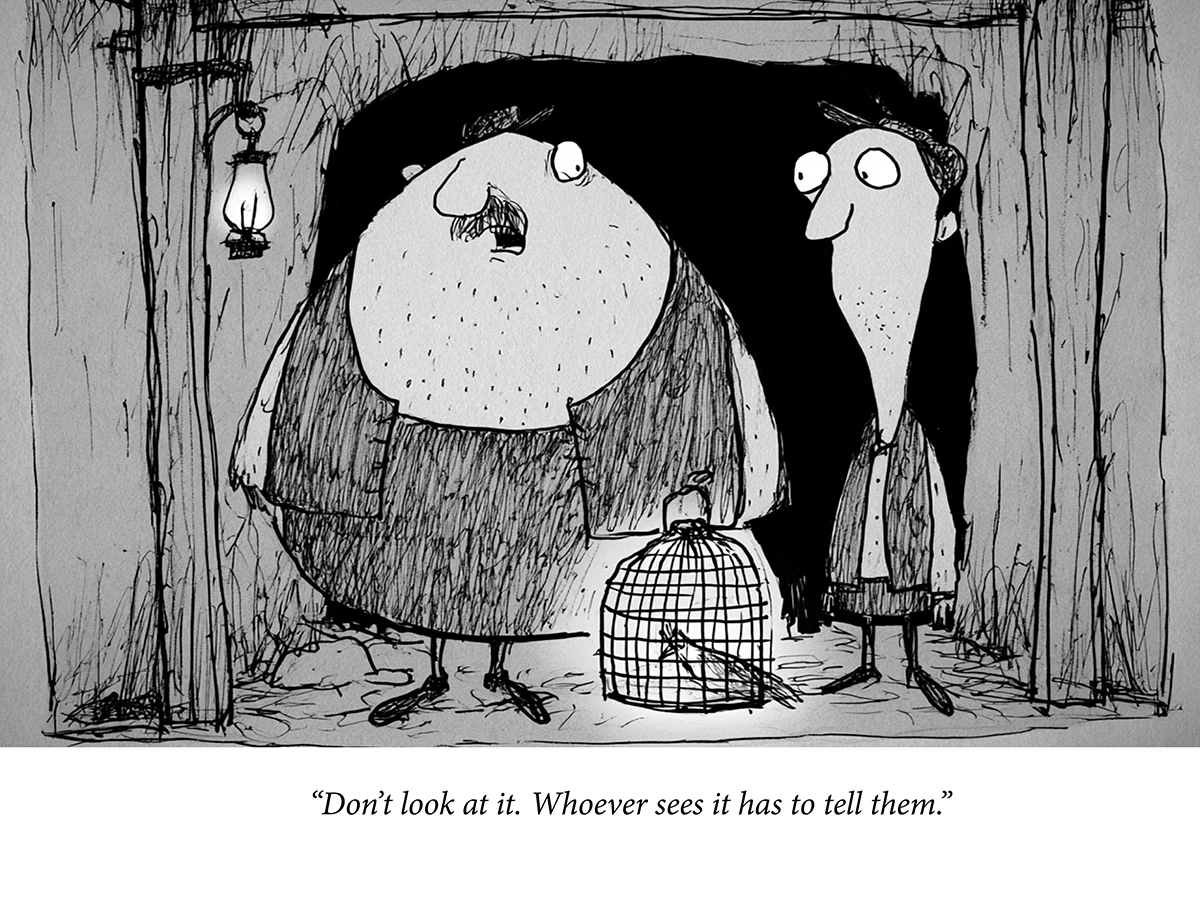
Three engineers left.
A CHRO had ninety seconds and one slide. The CFO had forty minutes and a model. Why the earliest signal in the room is priced as the least reliable, and the two questions that give it somewhere to go.
A CHRO I was sitting with last month had ninety seconds and one slide.
She used them well. Attrition, two roles unfilled for eight months, three senior engineers gone in a year from the same group.
The CFO had forty minutes and a model.
Nobody in that room was being unfair. The room had a format, and only one of them could file in it.
The objection came from someone who has run the work
I wrote a short version of that scene down and put it online, and it did what those posts do—a lot of quiet agreement from people who have been the one with ninety seconds.
Then I spent an hour on a call with a colleague I’ve worked with for years. She spent a decade inside a large engineering company and four more years building a business from nothing. She has run the kind of session where a room finally sees its own problem. She is not a skeptic about any of this. She’s the opposite.
And she stopped me. “Five of our best people left,” she said, “What does that actually mean? That isn’t enough to act on.”
She wasn’t defending the board. She was telling me the number in my own scene doesn’t do the work I want it to.
She’s right, and it took me a beat to see it.
Why the number doesn’t mean anything yet
Three senior engineers gone in a year. From where? Holding what? Replaceable in what time, by whom, at what cost? Was it one manager, one product line, one acquisition badly digested? Did they leave for a competitor, or for a quieter life?
Every version implies a different decision, and the slide supports all of them equally well.
Now set it beside a number that the same board would act on before lunch. Days of cash. Nobody in that room argues about what “Days of Cash” means. Not because money is simpler than people—it isn’t—but because somebody settled the definition a long time ago, and everyone since has agreed to be bound by it.
That agreement is the whole difference. It isn’t intelligence, and it isn’t intent. It’s a settled convention about what counts.
Financial capital had the argument. The other five never did.
A century and a half went into that convention, and it did not arrive in a straight line. Britain required an audited balance sheet in 1844 and withdrew the requirement twelve years later. It came back in 1900. Then the SEC, then the standards boards, then Sarbanes–Oxley—each one a fight, most of them following an expensive failure that forced the definitions to get tighter.
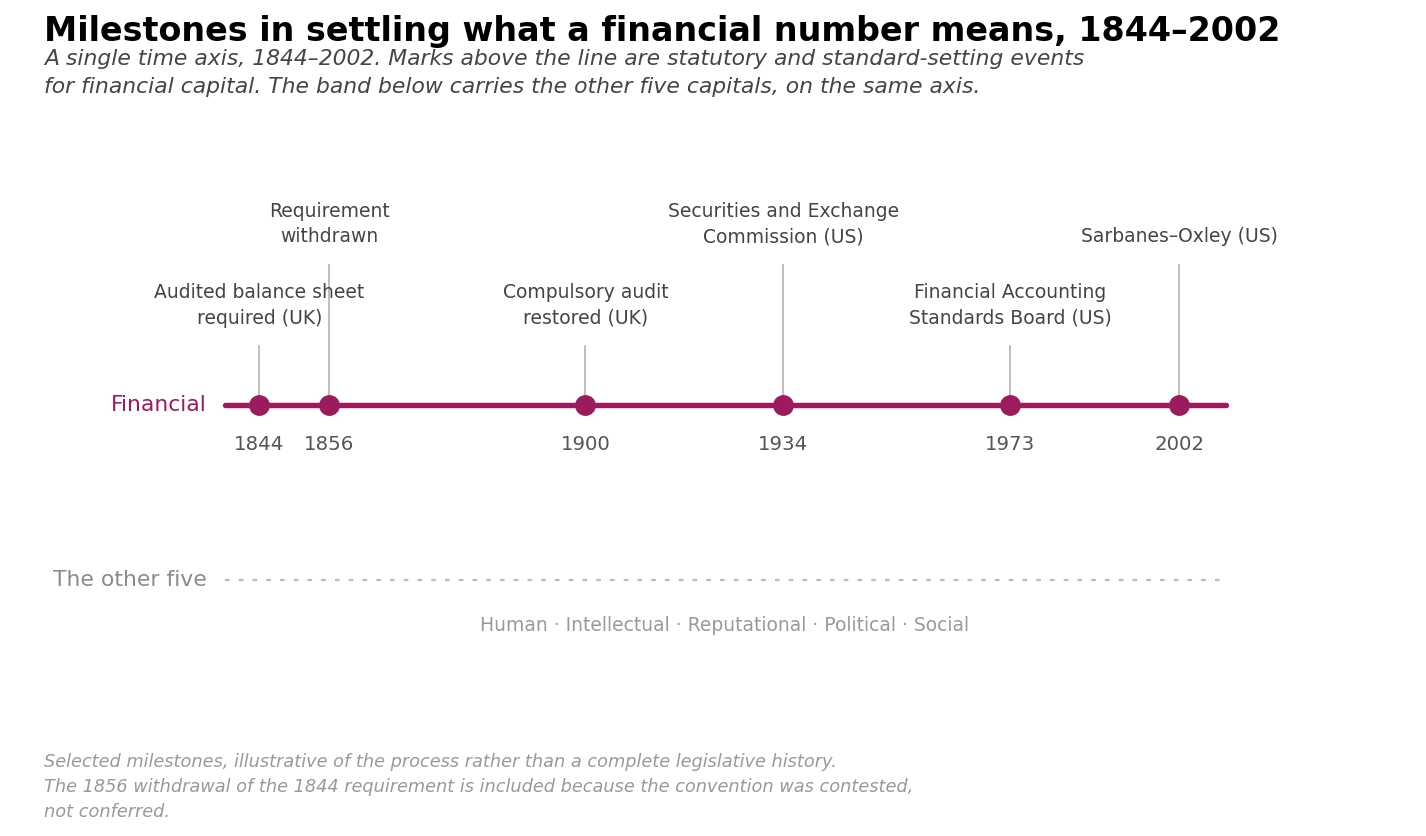
What a number means, who produces it, on what cadence, and who is answerable for it. All of it was argued over until it was boring.
Human, intellectual, reputational, political, and social capital never had that fight. There is no settled set of signals for the health of any of them, no agreed cadence, and—this is the part that matters—no route to anyone with the authority to respond.
So they arrive, the only way left to them. As something somebody noticed.
And boards don’t tell each other what they noticed. They present.
The cost sits in the gap between noticing and acting
Here’s what makes the ninety seconds expensive rather than merely unfair.
Three senior engineers out of one group is human capital going first. Behind them goes the knowledge nobody wrote down, which is intellectual capital, and it leaves on the same day they do, quietly, without a line item. A year or two later, the product slips, and the customers who stayed because the product was good start to notice, and that’s reputational. By the time any of it reaches the model the CFO was presenting, three to five years have passed, and the cheap options are gone.
The CHRO’s ninety seconds held the earliest information in the room. It was priced accordingly.
What I’ve started asking instead
Ask almost anyone what they track for the health of their people, and you get the same answer: we track when people leave. Then ask what else. The pause that follows is the finding.
So I’ve stopped asking whether a thing is measured, because that question invites a dashboard, and a dashboard is a slide with more pixels.
Two questions instead.
- What are the three to seven things we would want to know about each of the six capitals in this particular business?
- When somebody notices one of them, where does it go, and who has the authority to do something about it?
You’ll be wrong about some of the signals. Pick them anyway and start learning what they’re telling you. Nobody got days of cash right on the first pass either—they got there by being wrong in public for a century and a half and tightening the definition each time.
I’ve taken to calling the alternative Capital Symmetry Governance™, which is a heavy phrase for a plain idea: the other five capitals get what financial capital already has. Settled definitions. A cadence. A named owner. A route into the C-suite and the boardroom.
What a room without a route teaches
Here’s what I keep coming back to, and it isn’t comfortable.
Noticing creates an obligation. Once you’ve said it out loud, you’re the one who said it, and you have to be right about it later, and you own what happens next. In a room with a pathway, that obligation is the point—it’s how the thing gets governed.
In a room without one, it’s just exposure. So the people closest to the signal learn, quite rationally, to keep it to themselves.
That’s not a failure of nerve. It’s a structure doing exactly what it was built to do, to people who are behaving sensibly inside it.
The information is in the building. Somebody has to decide what it means before it can go anywhere.